
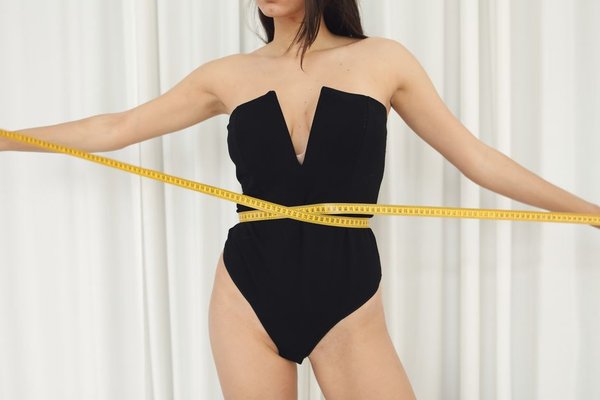
If your shoulders, waist and hips follow a fairly straight line, getting dressed can feel simple until an outfit looks flat when you put it on. The answer is not to disguise your figure. Rectangle body shape outfits work best when you decide where to direct attention: towards the waist, across the shoulders, down to a fuller skirt or along a clean, uninterrupted silhouette.
You can enjoy your natural straight lines, add gentle curves or switch between the two. The useful skill is knowing which clothing details create each effect.
Recognise the shape without obsessing over measurements
A rectangle body shape generally means your shoulders or bust and hips look relatively balanced, while your waist has less visible indentation. It describes proportions, not a dress size or a rule about what you can wear. Two people with a straight body shape may have completely different heights and fit preferences.
Create a waist with placement, not tight clothing
Waist definition is often about where a garment changes direction. A tucked shirt above trousers with a slightly wider leg creates a break between the torso and hips. A wrap top uses diagonal lines to draw attention inward. A jacket with shaped seams can do similar work without feeling restrictive.
Start with a soft half-tuck if a full tuck feels too formal. Try a belt over a shirt dress, fastening it where the dress naturally narrows rather than automatically choosing the highest point. A narrow belt gives subtle definition; a wider one makes a statement. Neither should feel uncomfortably tight.
If you prefer a relaxed outline, leave the waist unmarked. Good rectangle shape styling gives you options rather than insisting on an hourglass effect.
Choose tops that introduce shape and movement
Use necklines and sleeves as visual detail
Square, scoop and V necklines frame the upper body differently. Puff sleeves, gathered shoulders and a little structure at the sleeve head can add dimension above the waist. If you prefer a quieter look, a textured knit or open collar may be enough.
Pay attention to the hem
A peplum top flares below a fitted section, changing the outline at the hips. Ruched sides add texture without a belt. Cropped cardigans and jumpers can also suggest a waistline when their hems finish near the top of your trousers or skirt.
Build balance with trousers and skirts
High-rise jeans are a useful starting point because the waistband creates a clear centre. But mid-rise trousers may feel better on a shorter torso, and comfort matters more than a formula. Pair a defined waistband with wide-leg trousers, relaxed pleats or gently flared jeans to introduce volume below the waist.
An A-line skirt moves away from the hips and creates a softer outline. Pleated and gathered skirts offer movement, while a bias-cut midi follows the body with less visible structure. Pair a fuller skirt with a fitted top, or wear a straight skirt with a tucked blouse and cropped jacket.
Find dresses that do some of the styling for you
Wrap dresses, belted shirt dresses and fit-and-flare designs are practical shape-building outfits because they combine a defined middle with fabric that moves above or below it. Side ruching or a softly shaped waist seam can provide the same impression without an extra accessory.
For an understated look, try a straight shift dress with ankle boots and a structured coat. It celebrates the elongated line instead of changing it. For more definition, add a belt or choose a gently flared hem. Neither approach is inherently better; they produce different results.
Make layers work in changeable UK weather
Layering helps when an outfit must work from a chilly commute to a warm office. A cropped jacket over a longer top creates a horizontal break. A tailored blazer worn open frames the centre of the body, while a belted trench introduces shape over a simple base layer.
Think about proportions rather than piling on bulk. If your jumper and coat are both oversized and finish at the same point, the outline may look uniformly wide. A shorter cardigan under a longer coat, or a fitted knit beneath a roomy blazer, gives each layer a distinct role.
Use colour and texture to guide the eye
A tonal outfit in navy, chocolate or grey creates a long, streamlined effect. To suggest more definition, add a contrasting belt or tuck a lighter top into darker bottoms. Texture works similarly: a ribbed jumper with fluid trousers, or a crisp cotton shirt with a softly draped skirt, prevents everything from blending into one block.
Three outfit ideas to try this week
For work
Wear a tucked fine-knit jumper, tailored wide-leg trousers and a single-breasted blazer. The waistband creates a focal point, and the trouser leg adds balance. Swap the blazer for a belted trench on your commute.
For the weekend
Combine straight jeans, a softly ruched top and a cropped cardigan with trainers. Leave the cardigan open if you want its edges to frame your waist.
For an evening out
Choose a wrap midi dress with boots or low heels. Adjust the tie until it sits comfortably, then let the diagonal neckline and flowing skirt provide shape. A simple coat keeps the result polished without competing for attention.
Shop for fit before chasing a silhouette
On the UK high street, try two sizes if you are between them. Check shoulder seams, where waist shaping lands and whether a skirt pulls across the hips when seated. Adjusting a hem or waistband can be more useful than buying a supposedly ideal cut that fits poorly.
Before buying more, explore our guides to choosing jeans for your proportions, capsule wardrobe essentials and ways to style a blazer. Those basics can make your existing wardrobe much more flexible.
Frequently asked questions
Do rectangle body shapes have to wear belts?
No. Belts are one way to emphasise the waist, but tucks, wrap details, tailoring and cropped layers work too. A loose outfit can look intentional without waist emphasis.
Are oversized clothes suitable for a rectangle shape?
Absolutely. Vary lengths or combine one oversized piece with a fitted one if you want contrast. If you enjoy an entirely relaxed silhouette, there is no need to change it.
Which jeans work best for a straight body shape?
Wide-leg, straight, bootcut and gently flared styles can all work. Focus on a comfortable rise, a well-fitting waistband and the balance you like between top and trousers.
How can I add curves to a casual outfit?
Try a half-tucked T-shirt with comfortable mid- or high-rise jeans and an open cropped jacket. The change in lengths creates visual shape without dressing up.
Choose the shape you want to wear
The most useful approach to rectangle body shape outfits is to treat clothes as tools for proportion, not correction. A different hem length, a tucked top or a fuller skirt can change an outfit instantly. Keep the combinations that are comfortable, suit your daily life and feel like you.