
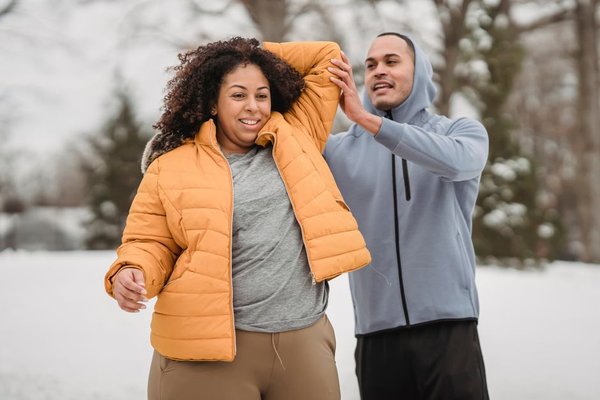
Cold-weather dressing in the UK is rarely about one heavy coat. A winter day can move from a frosty walk to a heated train, a damp lunch break and a windy trip home, so the best outfits are built in layers that can adapt. For plus-size winter fashion, the aim is not to hide your shape under bulky pieces. It is to combine warmth, movement and proportion so you stay comfortable from morning to evening.
Build warmth from the first layer
Start with a base layer that sits close to the body without feeling restrictive. Lightweight long-sleeved tops, soft jersey tees and fine-gauge thermal layers trap warmth without adding much volume. If you tend to overheat indoors, choose breathable fabrics instead of stacking several thick tops.
For everyday wear, try a fitted long-sleeved top under a looser knit or shirt. The closer layer provides warmth while the outer layer adds shape and texture.
Use knitwear to create shape, not bulk
A medium-weight jumper with a good base layer can feel more comfortable than one very chunky knit, especially under a coat. V-neck and open-collar knits can create a longer line through the upper body, while crew-neck styles work well with wide-leg trousers, straight jeans or a midi skirt.
If you prefer oversized jumpers, balance the volume with a more defined lower half. A front tuck can add structure without making the outfit formal. Cardigans are practical for plus-size layering in winter because they are easy to remove indoors. Longline cardigans work well over fitted tops and trousers, while cropped versions can define the waist over dresses and high-rise bottoms.
Choose outerwear for real UK weather
A winter coat needs to handle more than low temperatures. Wind and rain are often the bigger issue, so look for enough room through the shoulders and arms to fit a jumper underneath without pulling across the back.
Long wool or wool-blend coats
A long structured coat works for offices, dinners and smarter everyday outfits. Single-breasted styles create a clean vertical line, while belted coats let you adjust the fit depending on your layers.
Puffer coats and quilted jackets
For school runs, errands and outdoor walks, a puffer is often the practical choice. A longer puffer adds warmth through the hips and thighs, while shorter quilted jackets pair easily with wide-leg trousers and midi skirts. If you dislike an overly bulky look, choose narrower quilting or subtle waist shaping.
Water-resistant everyday options
On wet, blustery days, a water-resistant parka or insulated raincoat can be more useful than a fashion coat. Adjustable cuffs, a secure hood and enough length to cover the upper thighs make a noticeable difference when you are standing at a bus stop in drizzle.
Make trousers, jeans and skirts work harder
Dark straight-leg jeans are easy to combine with ankle boots, trainers and long coats, but winter outfits do not have to rely on denim. Ponte trousers offer stretch and warmth, while tailored wide-leg trousers look polished with a fitted knit and structured coat.
Midi skirts can be practical with opaque tights and boots. Knitted skirts, heavier jersey and lined woven fabrics suit winter better than thin summer materials. A long-sleeved midi dress with thermal tights, a cardigan and boots is another simple way to create warmth without several visible layers.
Useful internal-link opportunities include winter capsule wardrobe ideas, how to style wide-leg trousers in cold weather, and choosing the right winter coat length.
Use texture and colour to keep layers interesting
Layering can look heavy when every piece is dark and similar. Mixing textures adds depth: try denim with a soft knit, a smooth puffer over ribbed jersey, or a wool-blend coat with leather-look boots.
Monochrome dressing can also look polished. Combine related tones such as camel, oatmeal and cream, or charcoal, black and soft grey. Burgundy, forest green, deep teal and chocolate brown are useful winter colours with neutral basics.
A practical outfit formula for a cold, wet day
Imagine a weekday that starts with a ten-minute walk to the station, includes a heated office and ends with rain on the journey home. Start with a breathable long-sleeved base layer, add a medium-weight jumper, then wear straight-leg trousers with warm socks and weather-resistant ankle boots. Finish with a hooded insulated coat and a scarf.
On the train, the scarf and coat can come off. At lunchtime, the jumper and base layer still provide warmth. If the temperature drops later, everything can be added back without the outfit feeling overstuffed. That adaptability is often more useful in the UK than simply choosing the thickest clothing available.
Keep footwear comfortable and weather-ready
Ankle boots with a stable sole work with jeans, trousers and midi skirts, while knee-high boots add warmth with dresses. If you wear thick socks, check that your boots still have enough toe room for comfortable walking.
Use accessories and proportion with purpose
Scarves, hats and gloves are functional, but they can also make an outfit feel intentional.
Proportion is another useful tool. A long coat over wide trousers can feel balanced with a more fitted top underneath, while a cropped jacket works well with a longer skirt or high-rise trousers. These are not rules about what plus-size bodies should wear; they are ways to adjust the silhouette until it feels right to you.
Frequently asked questions
How can I layer winter clothes without looking bulky?
Start with thin, warm base layers and build outward with medium-weight pieces. Keep one or two layers closer to the body, then use a coat with enough room for movement. An open cardigan or small front tuck can add definition.
What type of coat works best for a plus-size winter outfit?
The best coat fits comfortably across the shoulders, closes without strain and suits your routine. Belted, single-breasted, longline and lightly shaped puffer coats can all work well. Warmth, comfort and proper fit matter more than following one supposedly flattering cut.
Can plus-size midi skirts work in cold UK weather?
Yes. Choose a heavier fabric, add opaque or thermal tights, and wear boots with a warm top layer. A longer coat provides extra protection from wind, making a midi skirt practical for many winter days.
Which fabrics provide warmth without too much bulk?
Fine-gauge wool blends, thermal jersey, fleece-lined tights, ponte and breathable base-layer fabrics can provide warmth without excessive thickness. Several lighter layers are often more adaptable than one very heavy garment.
Dress for the day you actually have
The most successful curve winter outfits work with your real routine. Start with light warmth close to the body, add flexible mid-layers, choose outerwear that can handle wind and rain, and finish with footwear you can comfortably walk in. Once those pieces are in place, colour, texture and proportion can make the outfit feel personal rather than purely functional.
UK winter dressing becomes easier when every layer has a job. Instead of hiding under bulky clothing, you can build warm plus-size outfits that move comfortably between cold streets and heated indoor spaces all day.